


Mid-century armchairs for modern interiors
A vintage chair can make a modern room feel more current, not less. Mid-century armchairs bring sculptural shapes and warm materials into contemporary spaces, where their distinct silhouettes create contrast without overwhelming a calm palette. Eero Aarnio’s Bubble chair, made with transparent moulded acrylic considered high-tech in 1968, shows how an iconic design can feel both rooted in its era and strikingly modern.
It’s easy to see why mid-century armchairs appeal: they bring history and character, while their clean lines sit comfortably alongside pared-back furnishings. The key is balance. Let the chair’s form stand out, then echo its timber, upholstery or finish elsewhere in the room so it feels considered, not out of place.
Discover the features that define mid-century style, practical ways to pair a vintage armchair with modern decor, and the designers behind enduring designs, from Arne Jacobsen’s Egg and Swan chairs to Eero Saarinen’s Womb chair. You’ll come away with a clearer sense of what makes these pieces distinctive and how to choose a look that brings warmth, clarity and a sense of ease to your home.
Key Takeaways
- Balance a vintage chair’s sculptural presence with modern furnishings and a restrained palette to create a room that feels cohesive.
- Look beyond silhouette: materials, visible structure and thoughtful craftsmanship all help define the style.
- Explore how influential designers and design teams shaped chairs that remain relevant in contemporary interiors.
- Consider how a carefully chosen buffet or cabinet can complement an armchair and bring greater harmony to your space.
How do vintage armchairs complement modern decor?
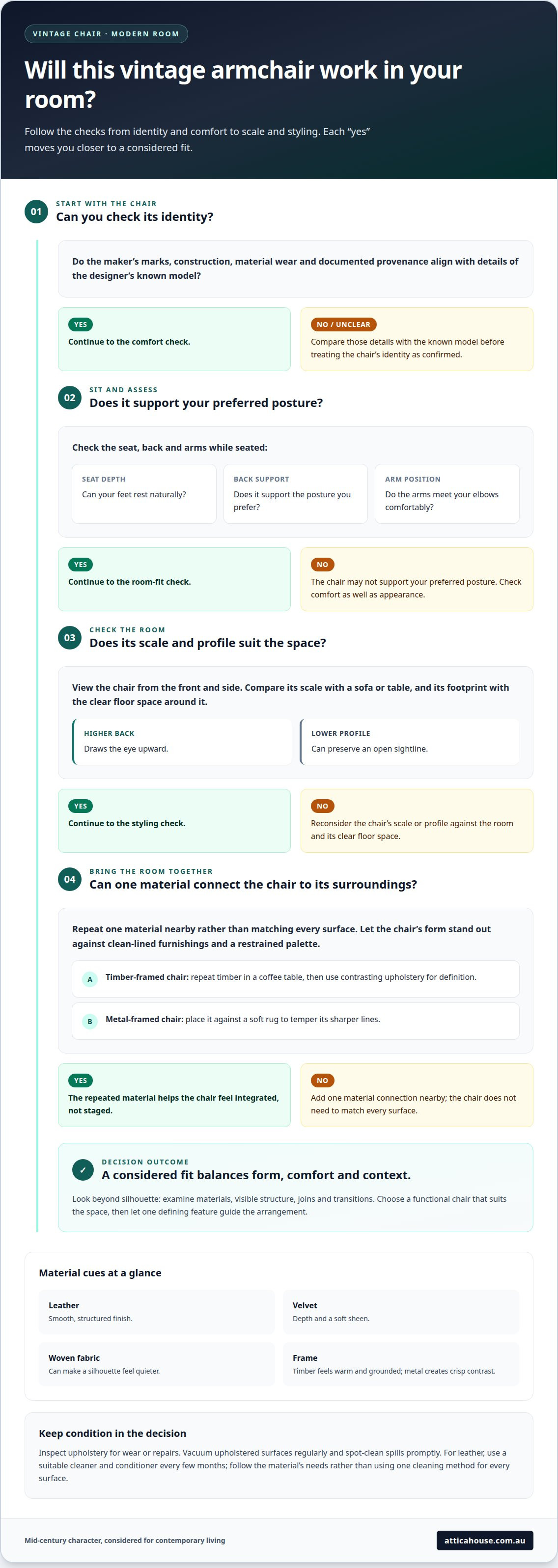
A vintage armchair adds a sculptural focal point to modern rooms, especially beside clean-lined furniture and restrained colours. To assess its authenticity, compare maker’s marks, construction, material wear and documented provenance with details of the designer’s known model.
Materials and manufacturing techniques
Look closely at how each material shapes the chair’s form and function. Eero Aarnio’s Bubble chair used transparent moulded acrylic, considered high-tech in 1968, to create an enclosed, futuristic silhouette. Bent plywood can form flowing curves, while visible metal frames give chairs a lighter, more architectural outline. Examine joins, edges and transitions between materials: carefully resolved details help explain how the design achieves its characteristic shape.
Upholstery and frame materials
Upholstery affects both a chair’s presence and the room’s tactile balance. Leather has a smooth, structured finish; velvet adds depth and a soft sheen; woven fabric can make a silhouette feel quieter. Rich upholstery, for example, can soften a room of timber and metal. Frame materials matter too: timber feels warm and grounded, while metal creates crisp contrast. Consider how each finish relates to nearby furnishings.
For a cohesive arrangement, repeat one material rather than matching every surface. Pair a timber-framed chair with a timber coffee table, then use contrasting upholstery for definition. Or place a metal-framed design against a soft rug to temper its sharper lines. These small connections help a vintage piece feel integrated rather than staged.
Check comfort and condition as well as appearance. Sit in the chair and consider whether the seat and back support your preferred posture. Inspect the upholstery for wear or repairs. A low, open frame can preserve sightlines in a compact living area, while a generously upholstered shape can anchor a reading corner. Choose a functional piece that suits the space, then use its materials to guide the surrounding palette.
Mid-century modern design features
Mid-century style favours clear geometry, purposeful construction and a balance of visual lightness and everyday usability. These qualities help a chair feel distinctive without crowding a modern room.
Comfort and ergonomic features
Comfort depends on how the seat, back and arms support your body, not appearance alone. Sit back fully and notice whether the seat depth lets your feet rest naturally. Check that the back supports your preferred posture and the arms meet your elbows comfortably. A reclined profile, as seen in lounge-chair designs such as the LC4, invites a more relaxed position than an upright occasional chair.
Armchair design features
Look for purposeful details such as tapered legs, an exposed frame, an enveloping back or a carefully shaped seat. A distinctive outline can become a focal point, while open space beneath the chair keeps the room visually airy. Leather adds a composed, tactile finish, and considered proportions help a piece feel timeless beside contemporary forms. Choose one defining feature and let it guide the room’s arrangement rather than competing with several bold shapes.
View a chair from the front and side, then consider its scale beside a sofa or table. A high back draws the eye upward; a low profile can preserve an open sightline. In a smaller living area, compare the chair’s footprint with the clear floor space around it. The best choice feels practical for daily use and visually deliberate from across the room.
For care, vacuum upholstered surfaces regularly and spot-clean spills promptly. For leather, use a suitable cleaner and conditioner every few months. Follow the material’s needs rather than applying one cleaning method to every surface.
Explore mid-century armchair designs to compare silhouettes and find a form that suits your space.
Chair designers and design teams
Designers approached chairs as both practical objects and expressions of a broader vision. Eero Saarinen created the Womb chair in 1948 at Florence Knoll’s request, shaping a generous seat around the idea of an inviting retreat. His Pedestal collection, conceived in 1957, included the Tulip chair. Compare these designs to see how one designer explored comfort and visual simplicity through distinct forms.
Arne Jacobsen’s work shows how chairs could contribute to an entire interior. He designed the Egg chair in 1958 for the SAS Royal Hotel complex, then designed the Swan chair and settee for the same Copenhagen commission. Their sculptural profiles make them recognisable as standalone pieces. Hans Wegner took a different approach: his Wishbone chair, also known as the CH24, belonged to a series designed for Carl Hansen & Søn in 1949.
Other designers explored structure and material as defining features. Harry Bertoia’s wire furniture collection, including the Diamond chair, debuted in 1952. Its open construction offers a lighter visual presence than an upholstered form. Verner Panton developed the Panton chair with Vitra from 1959 until 1967, reflecting a sustained collaboration between designer and manufacturer. These examples show why authorship matters: a recognisable design often reflects a specific idea about construction, shape or use.
Some enduring chairs emerged from shared design work. Jorge Ferrari-Hardoy, Antonio Bonet and Juan Kurchan designed the Butterfly chair in 1938. Le Corbusier, Pierre Jeanneret and Charlotte Perriand produced the LC4 for the 1929 Salon d’Automne. Hans Wegner also conceived the Sawbuck chair in 1952. To compare these chairs, note the credited designers, design date and intended setting. Then consider whether the defining form suits your room and how you plan to use it. A lounge chair chosen for its enveloping shape creates a different impression from an open, wire-frame design.
Iconic mid-century modern armchair designs
The Barcelona chair and Wassily chair show how different an iconic seat can feel. Marcel Breuer designed the Wassily chair in 1925, aged 23. Its exposed frame makes structure part of the design’s visual character. The Barcelona chair was designed for the German Pavilion at the 1929 International Exposition in Barcelona. Together, they show how architectural ideas can shape furniture as powerfully as upholstery.
Eero Aarnio’s Ball chair offers a more enclosed expression. After moving into his first house in 1962, Aarnio began developing its rounded form. He spent two years trying to attract interest before pitching the design to Asko. Its enclosing silhouette creates a retreat-like feeling, unlike the Wassily chair’s open frame. Comparing the two helps clarify whether you prefer an armchair that feels sheltered or visually light.
Use these designs as reference points, not as a checklist for recreating a period room. The Barcelona chair’s formal presence suits a considered focal arrangement; the Wassily chair’s visible structure can keep a room feeling open. Aarnio’s Ball chair makes a stronger sculptural statement. Before choosing, consider the chair’s visual weight beside nearby furniture, the available floor space and the atmosphere you want to create. One distinctive silhouette can give a contemporary interior character without requiring every piece to share its era.
For an informed choice, compare the outline, construction and intended experience of each design. Ask whether the chair should anchor a quiet reading corner, define a conversation area or act as an expressive accent. These questions turn iconic references into practical guidance. A chair’s legacy matters, but its scale and presence in your own room matter too. Explore mid-century armchair designs and compare silhouettes for your space.
Attica House: Buffets & Cabinets
Attica House offers considered furniture to complement your chosen armchair. Explore Buffets & Cabinets for a focal point with practical presence, or choose a Coffee Table to anchor a seating arrangement. Console Tables can extend the room’s visual rhythm, while Dining Tables help carry a cohesive aesthetic into another space.
Pairing pieces doesn’t mean matching every finish. Let the armchair lead, then select furniture that echoes one detail, such as its timber tone, clean geometry or sculptural profile. This creates a connection while allowing each piece to retain its character.
Explore Attica House’s furniture at atticahouse.com.au, or contact the team to continue considering the right pieces for your home.
Make your next choice with intention
The right chair should suit the way you live, not simply echo a familiar design era. Before choosing, picture where you’ll sit, what the room needs and how the chair’s shape will look alongside the pieces you already own. That pause can turn inspiration into a personal, considered decision.
Mid-century armchairs can bring a distinctive point of view to a contemporary home, but the lasting pleasure comes from choosing one that feels right in your space. Let comfort, proportion and your own taste guide the final selection. If you’re ready to explore possibilities, browse Attica House’s armchair collection and find a design that invites you to settle in. A thoughtful choice can make home feel more like your own.
Frequently Asked Questions
What are some common types of vintage armchairs available?
Common types include lounge chairs, accent or occasional chairs, swivel chairs, rocking chairs and high-back designs. A lounge chair suits longer periods of reading or relaxing, while an accent chair can add a distinct shape without dominating a seating area. Swivel and rocking versions bring movement, so consider floor clearance and how people will move around the chair.
What defines a mid-century modern armchair?
A mid-century modern armchair expresses the era’s design language through purposeful form, considered proportions and a balance of structure and comfort. It might have an exposed frame, a sculptural back or tapered supports, but no single feature defines every design. Consider how the chair’s shape, construction and function work together rather than relying on a label or decorative detail alone.
What defines a mid-century armchair?
A mid-century armchair is either a period piece or a later design that draws on the period’s furniture style. The distinction matters: an original vintage chair has a history as an object from that era, while a contemporary interpretation references its forms. For either, compare the overall silhouette, construction and proportions with the look you want in your room.
What are the most popular mid-century armchair styles and designers?
Recognisable designs include Arne Jacobsen’s Egg and Swan chairs, Eero Saarinen’s Womb chair and the Tulip chair from his Pedestal collection. Each creates a different mood, from the Egg’s enclosing form to the Tulip’s cleaner profile. Use the designer’s name as a starting point, then compare the chair’s scale and intended use with your space.
Which mid-century armchair materials and upholstery are most durable?
Durability depends on the material, the chair’s condition and how it will be used. Check for a sound frame, stable joints, and upholstery without thinning or split seams. Leather and tightly woven fabrics have different care needs, so consider household use, pets and sunlight exposure before choosing. A well-maintained chair may serve differently from one that needs restoration.
What should I consider when choosing an armchair for comfort and room size?
Start with the chair’s footprint and leave enough room to walk around it and use nearby furniture. Then sit down and check the seat depth, back support and whether the arms feel comfortable. In a compact room, an open-frame or lower-profile design may preserve sightlines. For a reading corner, prioritise a seat shape and posture you can settle into comfortably.