


Luxury Wool Rugs for Australian Rooms, Sized to Fit
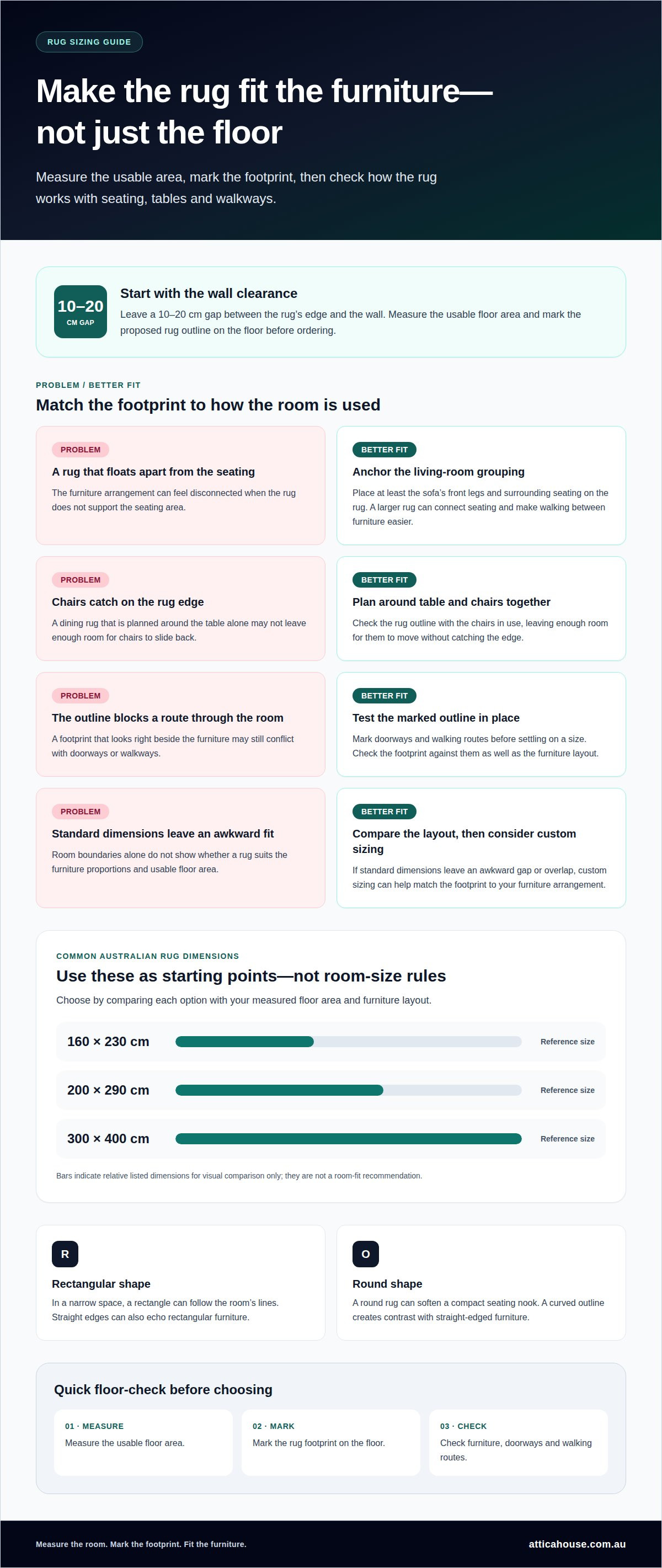
The right rug size is about more than filling an empty patch of floor. For luxury wool rugs in Australia, start by measuring the usable floor area and marking the proposed rug footprint on the floor before ordering; leave a 10-20 cm gap between the rug’s edge and the wall. In a living room, position the rug so at least the sofa’s front legs and surrounding seating rest on it, bringing the arrangement together.
It’s natural to want a rug that feels inviting as well as beautifully made. Wool is naturally insulating, while its texture can add warmth and depth to a room. This guide explains how to choose a size that suits your furniture, what to look for in wool rug construction and environmental qualities, and how custom shapes and edging can influence the final look. With a few considered decisions, the rug can feel like an integral part of the room rather than an afterthought.
Key Takeaways
- Choose a rug footprint that supports the room’s furniture arrangement, rather than selecting a size by appearance alone.
- Explore how colour, shape and handcrafted construction can bring a room’s style into focus.
- Compare standard dimensions with custom shapes and edging to find a finish that suits your space.
- Consider wool’s natural insulating quality alongside its material and making when weighing a rug’s environmental qualities.
How do I choose the right rug size for my room?
For luxury wool rugs in Australia, start with the usable floor area and mark the proposed rug footprint before ordering. Leave a 10-20 cm gap between the rug edge and walls. In a living room, position it beneath at least the front legs of the sofa and surrounding seating. This anchors the arrangement without covering every visible section of flooring.
For a dining room, plan around the table and chairs together. The rug should leave enough room for chairs to slide back without catching the edge. In a living room with regular foot traffic, a larger rug can connect the seating and make walking between furniture easier. Check the outline against doorways and walkways before choosing among luxury wool rugs in Australia.
Common dimensions include 160 x 230 cm, 200 x 290 cm and 300 x 400 cm. Treat these as starting points, not room-size rules: furniture proportions and usable floor area determine the best fit. An Australian-designed rug handcrafted in India can pair local design direction with overseas making. Check the stated origin and construction details when comparing rugs.
Collections may offer varied colours, patterns and shapes, while designer styles range from restrained textures to expressive motifs. Choose a colour that relates to existing furnishings, then consider how its pattern sits beside other visual details. A 100% wool option may appeal if natural fibre is a priority; the label describes fibre content, not the rug’s size or placement.
Free styling and design advice can help translate room measurements, furniture and preferred colours into a considered choice. An online rug design tool can also help visualise a rug within an interior, where available. For delivery, returns, warranties and import duties in Australia, terms depend on the seller, rug origin and delivery arrangement. Review those conditions alongside size and material before purchase.
How Are Wool Rugs Made?
A rug’s construction influences its feel and appearance. Compare the fibre, construction, colour and texture with the room where it will be used.
Wool Types for Rugs
New Zealand wool, Australian wool and other wool types are best compared through the product’s stated fibre content and construction, rather than origin alone. For example, Marimekko Seireeni Green is made from 100% New Zealand wool. Check the label for whether a rug uses pure wool or blends wool with another fibre. This distinction helps you understand what the material description actually promises.
Construction adds another useful point of comparison. Orla Kiely Stem Kingfisher is described as pure new wool, hand-tufted, with a 12 mm pile. Those details identify its fibre description, making method and pile height; they don’t establish a universal ranking between wool origins. Compare them with the specifications of each rug you’re considering.
Styles, Colours and Construction
Hand-knotted rugs and other handmade designs differ in how they’re made and finished. In a living room, pair a textured, understated rug with simple furnishings, or let a patterned design become the focal point. In a dining room, consider how its colour and pattern work with the table, chairs and surrounding decor.
Choose colour by looking at the room’s existing palette: a muted rug can settle a vivid scheme, while a stronger colour can bring definition to neutral flooring. Then compare texture and softness with how the room is used. Viewing a design in a room visualisation tool, where available, can help you judge its balance before choosing a rug size. Explore Orla Kiely designer rug designs for a concrete example of how pattern and colour can shape a space.
Custom rug size, shape and edging
Match the rug’s footprint to your furniture arrangement, not just the room’s boundaries. In a living room, placing at least the sofa’s front legs and nearby seating on the rug can bring the arrangement together. For a more open feel, choose a smaller rug to define a central area while leaving more flooring visible. Mark the outline on the floor before settling on a size.
Common Australian rug dimensions include 160 x 230 cm, 200 x 290 cm and 300 x 400 cm. Use these as reference points, then compare each with your measured furniture layout. A dining arrangement needs room for chairs to move without catching the rug’s edge. In a narrow space, a rectangular shape can follow the room’s lines; a round rug can soften a compact seating nook.
Custom sizing can help when standard dimensions leave an awkward gap or overlap. Measure the usable floor area, mark doorways and walking routes, then sketch where the furniture will sit. Decide whether the rug should go under a coffee table, extend beneath the seating, or define a zone in an open-plan room. These choices help determine the dimensions and shape you need.
Shape and edging affect how a rug relates to the room. A straight edge can echo rectangular furniture, while a curved outline creates contrast. Consider how the border will look against the floor and sit beside furniture legs. For a tufted wool rug, check the product details for its finish and pile rather than assuming all edges and textures are the same.
Consider how the rug feels underfoot and whether it brings the room together. A larger rug can connect a sofa and armchairs, while a smaller one can define a reading nook. In a room that opens onto an outdoor area, plan the indoor and outdoor furniture as separate zones.
Environmental qualities of wool rugs
Wool is naturally insulating and can bring warmth and a soft feel underfoot to Australian interiors. If you have pets or children, consider the rug’s texture, pattern and care requirements before choosing. For allergies or personal sensitivities, check the fibre content and make sure the rug suits your household’s needs.
Environmental qualities depend on more than a “natural fibre” label. Check whether the rug is 100% wool or combines wool with other fibres, and look for clear material and construction details. For example, Marimekko Seireeni Green is made from 100% New Zealand wool. That identifies its fibre content and origin, but doesn’t by itself describe the rug’s full environmental impact.
Construction also affects how a rug works in your home. Hand-knotted, hand-tufted and other handmade rugs can differ in feel and finish. Read the product details to understand how the rug is made, which fibres it contains and how its pile is described. Assess quality using these specific details rather than relying on the wool label alone.
Consider use as part of responsible selection. A rug chosen for the room’s traffic, furniture and styling is more likely to feel at home in its setting. A subtle pattern may suit a calm living area, while a more expressive design can bring definition to a dining space. Choose texture and colour for the room’s actual needs, rather than appearance alone.
Care is another practical consideration. Deep-clean a wool rug only occasionally, and let it dry completely before placing it back on its underlay. Following those steps helps you care for the rug without treating wool’s natural origin as a substitute for maintenance. To explore colour, pattern and wool design together, browse Orla Kiely wool rug designs.
Attica House: Designer Rugs
Attica House offers Designer Rugs for readers weighing room measurements, material preferences and style. Explore the collection as you consider how a rug will sit with your furniture and whether its colour, pattern and texture suit the atmosphere you want to create.
A considered room extends beyond the rug. Coffee Tables and Buffets & Cabinets can help shape a living space, while Luxury Outdoor Furniture can furnish a separate outdoor setting. Consider each piece in relation to the layout and the rug’s visual presence, rather than choosing items in isolation.
Use this guidance to narrow your priorities, then explore Attica House’s Designer Rugs collection with those decisions in mind. When you’re ready to choose, contact Attica House.
Make the room feel distinctly yours
Choosing luxury wool rugs in Australia is a chance to shape how a room feels as well as how it looks. Picture the everyday moments the space needs to accommodate: a quiet pause beside the sofa, a shared meal or an easy transition between living areas. Let those needs guide your choice so the rug feels at home in your space.
Attica House brings Designer Rugs together with furnishings that can complete a considered interior, including Buffets & Cabinets, Coffee Tables and Console Tables. Thoughtful combinations can give a room balance while keeping its character personal and welcoming.
Explore the designs and consider which one feels most at home in your space. Explore designer rugs at Attica House, and take the next step towards a room that feels beautifully yours.
Frequently Asked Questions
How do I know what size rug I need?
Start by mapping the room’s fixed furniture. Sketch the sofa and chairs, then compare their footprints with rug dimensions. In a bedroom, consider the bed’s footprint and access to bedside tables; in an open-plan room, decide which furniture group the rug should define. Keep door swings and clear walking routes in view. This makes scale easier to judge than relying on a product photo alone.
How do I know which rug will suit my space?
Start with the room’s purpose, then match the rug’s texture, shape and visual weight to how you use the space. A reading corner may suit a softer-feeling, understated design, while a central living area can carry a stronger pattern. Consider nearby furniture finishes too. The rug should relate to existing pieces without making every surface compete for attention.
How do I know if a designer rug suits my existing colour scheme?
Compare the rug with the room’s main colours, including the flooring, upholstery and curtains. Look for a shared undertone or accent colour that connects the rug to existing furnishings. A pattern may combine several colours, so assess its overall effect as well as individual details. When shopping online, compare the rug image with your room in different lighting before deciding.
What's the difference between hand-knotted, hand-woven, hand-loomed and hand-tufted rugs?
These terms describe different construction methods. Hand-knotted rugs are made by tying individual knots into a foundation. Hand-woven rugs interlace fibres across the rug, while hand-loomed rugs are made on a hand-operated loom. For hand-tufted rugs, yarn is pushed through a backing with a tufting tool. Check each product’s construction details, because these terms aren’t interchangeable.
What are the best luxury wool rug brands available in Australia?
There’s no single best rug brand for every Australian home. Compare each design’s fibre, construction, dimensions and style with your room and priorities. Attica House offers Designer Rugs, including designs by Orla Kiely. Assess the individual rug rather than choosing by label alone: one colour, pattern or texture may suit your interior better than another.
What are the best Australian retailers for hand-knotted and hand-tufted wool rugs?
Attica House is an Australian retailer offering Designer Rugs. When choosing a hand-knotted or hand-tufted rug, check the construction details for that design instead of assuming every rug in a collection is made the same way. Compare them with the fibre content, pile details and intended room. These product-specific details help you distinguish options and compare rugs against your needs.