


Dressing Table Stools for the Right Fit and Height
A vanity ottoman can fit beneath a dressing table if its height and width clear the space under the top and between the legs. When choosing dressing table stools, compare the seat height with the table’s underside clearance, then check the stool’s full footprint. Even a compact shape needs enough room to slide in and out comfortably.
It’s natural to want a comfortable seat that suits your bedroom without crowding the dressing area. Start with a few practical measurements, then consider how you sit and the finish you want beside the table. This guide explains how to check under-table clearance, choose a suitable stool height, find a compact option and compare materials such as bouclé, chenille, velvet and PU leather. Use these details to narrow your options to a stool that works for your routine and completes the room.
Key Takeaways
- Compare the stool’s full height and width with the space beneath the table so it can slide in without crowding.
- Choose a seat height that lets you sit comfortably at the vanity, rather than relying on appearance alone.
- In a small bedroom or apartment, look for a compact footprint that suits the available floor space and daily routine.
- Consider how boucle, chenille, velvet and PU leather differ in texture and visual effect when choosing a finish for your room.
Can a vanity ottoman fit underneath a dressing table?
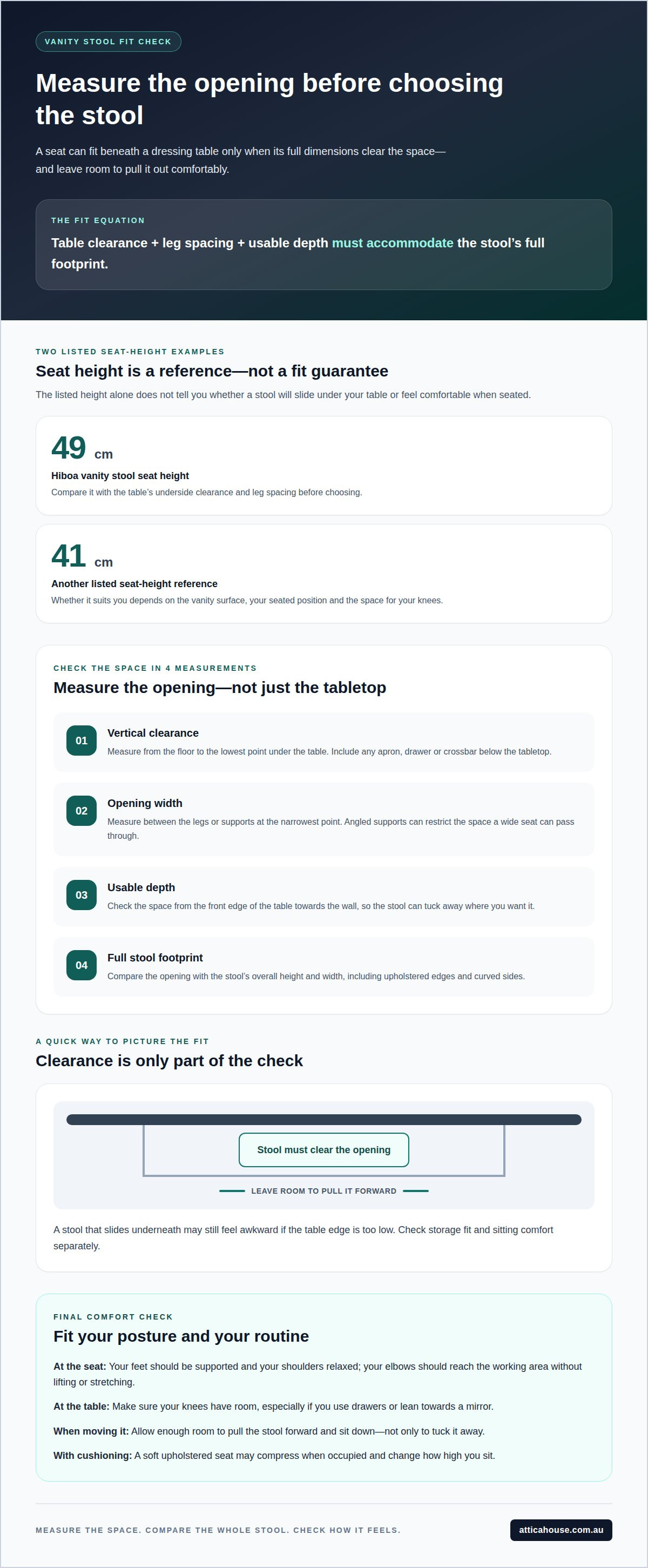
Yes, a vanity ottoman can fit beneath a dressing table when its height and width suit the available opening. A 49 cm seat height is listed for the Hiboa vanity stool, but seat height alone doesn’t establish whether it will slide under your table. Compare the stool’s overall dimensions with the table’s underside clearance and leg spacing before choosing.
Measure the space where the stool will sit rather than relying on the tabletop height. First, measure vertically from the floor to the lowest point beneath the table. Then measure the width between the legs or supports and the usable depth from the front edge towards the wall. Together, these measurements show whether the stool can tuck away and pull out without catching.
- Measure vertical clearance. Check from the floor to the underside, including any apron, drawer or crossbar that hangs below the tabletop.
- Measure the opening width. Use the narrowest point between the legs, since a wide seat may not pass through angled supports.
- Check stool dimensions. Compare the seat’s full height and width, including any upholstered edges or curved sides, with your measurements.
- Consider the pull-out path. Allow room to move the stool forward and sit down comfortably, not just tuck it away.
Many compact vanity ottomans are designed to fit beneath dressing tables, but the dimensions still need to suit your furniture. A narrow opening may call for a slim or rounded profile, while a low underside may rule out a taller seat. Check storage fit and sitting comfort separately: a stool may slide underneath but still feel awkward if the table edge is too low for you.
Before choosing a style, compare the stool’s listed dimensions with your measurements and picture its full footprint in the room. This simple check helps preserve clear floor space and keep the dressing area comfortable to use.
Which stool height suits my vanity?
The right seat height lets you sit close to the vanity without hunching or reaching upwards. Start with the surface where you apply makeup or style your hair. Sit on a chair of similar height and notice whether your shoulders relax and your arms rest comfortably. Then compare that position with the stool’s listed seat height.
A vanity stool with a 41 cm seat height offers one concrete reference point. It won’t suit every table or person, because the distance between the seat and tabletop affects comfort. A high vanity paired with a low stool can encourage you to lean forward. A low surface with a tall seat may leave your knees crowded beneath the table.
Use these steps to compare height and fit:
- Measure the vanity surface. Record its height from the floor, then consider where your hands need to rest.
- Check the stool’s seat height. Compare the stated measurement with your seated position, not just the table’s appearance.
- Test your posture. Sit with your feet supported and shoulders relaxed. Your elbows should reach the working area without lifting or stretching.
- Account for cushioning. A softly upholstered seat may compress when occupied, changing how high you sit.
Use your usual routine as a guide, since comfort is personal. If you lean towards a mirror, check that you can approach without pressing your knees against the vanity. If you use drawers, make sure there is room for your legs. These details matter as much as the seat height.
For a final comparison, shortlist stools with clear seat-height dimensions, then picture each beside your table. Explore dressing table stool styles with both comfort and proportion in mind.
Compact stools for small bedrooms and apartments
In a small bedroom, a stool should support your routine without taking over the floor. Consider its complete footprint, including the legs, curved edges and upholstery. A compact, visually light design can keep the dressing area open, while a bulky silhouette may interrupt movement between the bed, wardrobe and vanity.
Start by observing how you move through the room. Note the routes between the doorway, bed and drawers, then identify where a stool can sit without blocking them. If it needs to tuck beneath the vanity, compare its shape with the table’s leg arrangement. If it will stay beside the table, make sure nearby drawers and doors remain accessible.
- Choose a contained shape. A rounded or narrow seat can be easier to position beside a vanity than a broad, boxy form.
- Consider the legs. Open legs create a less solid visual outline; a fully upholstered base can feel more substantial.
- Think about movement. A stool that can be lifted and repositioned easily suits a room where floor space serves several purposes.
- Coordinate finishes. A fabric or colour that complements the bedroom palette helps the seat blend into the setting.
For example, a compact bedroom with a narrow walkway may suit a small-profile stool that slides close to the vanity. In a studio apartment, the same seat might sit beside the dressing area while in use, then move aside to free up floor space. Let the room’s layout guide your choice instead of selecting the smallest-looking option by default.
Comfort still matters when space is limited. Check that the seat supports your usual routine and lets you sit naturally at the table. A stool that looks discreet but feels awkward may go unused. Balance its proportions, ease of movement and comfort to make a small dressing corner feel considered rather than crowded.
What materials are available for makeup vanity ottomans?
Upholstery shapes an ottoman’s look and feel, as well as its place in the bedroom. Bouclé has a looped, textured surface that adds softness. Chenille offers a smooth, gently tactile finish, while velvet brings visual depth and PU leather creates a sleeker look. Each material can change the mood of the vanity area.
Consider how you’ll use the stool before choosing its covering. If it will be part of your daily routine, think about how its finish suits regular use. Consider where it will sit, how it relates to nearby fabrics and whether its texture complements the room. In a calm, neutral scheme, eggshell-white bouclé can feel soft and tonal; burnt-orange velvet can create a more vivid accent.
Material is only one factor in the price of a vanity ottoman. Shape, upholstery, detailing and overall design can also affect the cost. Compare pieces by their construction and finish, not by fabric name alone. Two chenille stools, for example, may have different silhouettes and decorative details, so the material doesn’t tell the whole story.
- Bouclé: Choose its pronounced texture when you want a tactile, softly layered look.
- Chenille: Consider its composed finish for a refined, understated setting.
- Velvet: Use its depth to introduce colour or a more dressed-up accent.
- PU leather: Select its smooth appearance when a cleaner, tailored effect suits the room.
Before deciding, compare the upholstery with your bedding, curtains and other nearby textures. A coordinated finish can help the stool settle into the room; a contrasting colour can give the vanity a distinct focal point. Explore upholstered vanity stool styles to find a material and design that suit your space.
Attica House: Stools & Ottomans
Attica House offers Stools & Ottomans to help furnish a dressing area with a considered balance of comfort and style. Once you’ve measured your vanity and settled on a suitable height, explore options that suit your room’s palette and available space. A well-chosen seat can also sit naturally alongside furnishings such as a bedside table or console table.
When you’re ready to compare furniture for your home, use your measurements and preferred finish to guide your selection. Attica House offers statement pieces for considered interiors, while the guidance here can help you assess proportions, materials and placement.
For help with your furniture selection, contact Attica House.
Make your dressing space feel complete
A considered dressing area can bring a quiet sense of order to the start and end of your day. Choose a stool that reflects the feel you want, whether that means a gentle accent or a more sculptural presence. The best dressing table stools feel at home in the wider setting, not simply beside the vanity.
Attica House also offers Buffets & Cabinets, Coffee Tables and Console Tables, helping you carry a considered furniture style into other rooms. Each piece can contribute to a cohesive home while retaining its own character.
As you shape your space, choose with both daily comfort and visual harmony in mind. A well-placed stool can make a private corner feel more personal and complete. Contact Attica House about dressing stools and take the next step towards a setting that feels distinctly yours.
Frequently Asked Questions
What is the typical price range for vanity stools in Australia?
There’s no single reliable price range for every style. Material, upholstery, shape and decorative details all affect the listed price. For a useful comparison, look at pieces with similar finishes and designs, then consider overall fit and finish rather than choosing on price alone. Review the item price and any delivery charges shown before placing your order.
Which dressing table stools suit a standard vanity table?
Choose a seat height that lets you sit comfortably at your vanity, as table heights and body proportions vary. Sit with your feet supported and shoulders relaxed, then check that your arms reach the tabletop naturally. Also consider how far the seat can slide beneath the table. A comfortable stool should leave room for drawers and your usual routine.
What stool designs work best in small spaces?
The best option keeps a clear path through the room and suits the vanity’s footprint. In a narrow bedroom, a stool with an open base may feel less imposing than a solid-sided design. Consider where it will go when not in use, too. A seat that moves easily between the vanity and another spot can make a compact room more flexible.
Are upholstered or wooden seats better?
Neither material is universally better; the right choice depends on comfort, style and care. Upholstery can feel soft and inviting, while a wooden seat offers a firmer surface and can complement timber furniture. Consider how long you usually sit at the vanity and which textures are already in the room. Choose a finish that feels comfortable and balanced beside the table.
What materials and upholstery are easiest to clean and maintain?
Smooth surfaces are generally easier to wipe than textured upholstery, while fabric care depends on the specific material. For Attica House fabric items, professional dry-cleaning services are recommended because home cleaning causes shrinkage. Scotch Guarding is also recommended to help protect fabric from stains. Check the care guidance for the exact material, especially if you’ll use the seat frequently.
What should I check before buying dressing table stools online?
Before ordering, review the product dimensions, material description, finish and care instructions. Look closely at the images for details such as the base and upholstery, then consider how the stool will sit alongside your existing furniture. Read the delivery and returns information as well. These checks help you make a considered choice from home and know what to expect when your item arrives.